
Keep your device in portrait orientation for the best user experience.
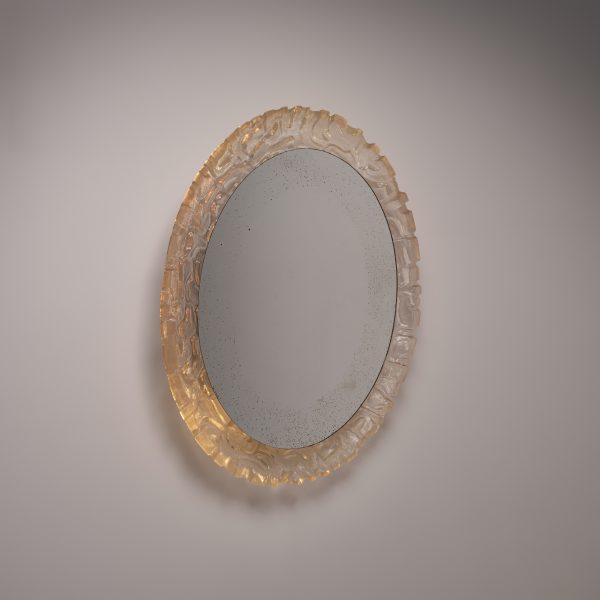
Hillebrand was a prominent German lighting manufacturer best known for its refined mid-century modern and late-modernist lighting designs, produced primarily from the 1950s through the 1980s. Based in Germany, the company built its reputation during the postwar design boom, when European interiors were being reshaped by new materials, industrial production techniques, and a strong emphasis on functional modernism.
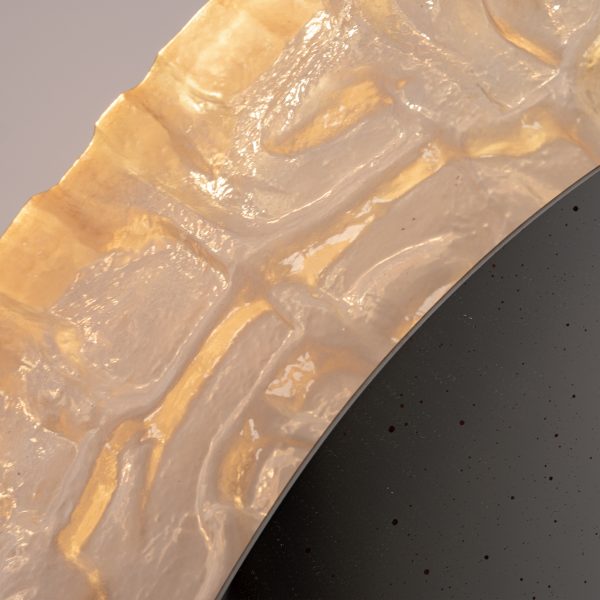
Hillebrand became especially recognized for its mastery of glass lighting components. Many of its most iconic fixtures feature hand-blown or molded glass shades in opaline white, smoked gray, amber, and occasionally richly textured or patterned finishes. These glass elements were often paired with brass, chrome, or anodized aluminum fittings, reflecting the era’s fascination with combining warmth and precision engineering. The resulting designs are characterized by soft, atmospheric light diffusion and a strong architectural presence.
The company produced a broad range of lighting types, including pendant lamps, ceiling fixtures, table lamps, floor lamps, and wall sconces. Its pendant chandeliers in particular became widely used in residential dining spaces and public interiors, often arranged in clustered compositions or modular systems. Many Hillebrand designs reflect influences from German functionalism as well as broader Scandinavian and Italian modernist trends, resulting in a hybrid aesthetic that is both restrained and decorative.
While Hillebrand did not always foreground individual designer names in the way some contemporaries did, its design output reflects the broader industrial design culture of postwar West Germany, where collaboration between manufacturers, engineers, and anonymous studio designers was common. The emphasis was on reproducible quality, durability, and visually calm forms that could integrate seamlessly into modern interiors.